How to Lower Blood Pressure Naturally: Lifestyle Changes With Real Evidence
Evidence-based lifestyle changes to lower blood pressure naturally — specific effect sizes for each intervention, the DASH diet explained, the sodium nuance most guides miss, exercise and sleep evidence, and a clear framework for when lifestyle works alongside medical care.
Approximately 1.28 billion adults worldwide live with hypertension — about 1 in 3 adults globally [SOURCE: verify — WHO hypertension prevalence data]. Of those, a significant proportion are in the borderline to stage 1 range where lifestyle changes have been demonstrated to produce clinically meaningful blood pressure reductions — sometimes enough to avoid or delay medication, always enough to reduce cardiovascular risk when used alongside medical management.
This guide covers how to lower blood pressure naturally through lifestyle changes with the strongest evidence — with actual effect sizes so you can assess what each intervention is likely to produce, rather than vague reassurance that 'exercise helps.'
Disclaimer: This article is for informational purposes only and does not constitute medical advice. Consult a qualified healthcare professional before making any changes to your health routine.
Important: High blood pressure is a serious medical condition. Never stop or adjust medication without consulting your doctor. The lifestyle changes here complement medical treatment — they do not replace it for moderate to severe hypertension.

What Blood Pressure Numbers Actually Mean
Blood pressure is expressed as two numbers: systolic (the pressure when the heart contracts) over diastolic (the pressure between beats). Normal is below 120/80 mmHg. Elevated is 120-129/below 80. Stage 1 hypertension is 130-139/80-89. Stage 2 is 140+/90+. Hypertensive crisis is above 180/120 — requires immediate medical attention.
Most lifestyle interventions produce effects in the 3–10 mmHg range for systolic pressure. This sounds modest but is clinically significant: a 5 mmHg reduction in systolic blood pressure is associated with approximately 14% lower risk of stroke and 9% lower risk of coronary heart disease at a population level [SOURCE: verify — Blood Pressure Lowering Treatment Trialists' Collaboration].
The DASH Diet — The Highest-Evidence Dietary Intervention
The Dietary Approaches to Stop Hypertension (DASH) diet was specifically designed and tested for blood pressure reduction. In controlled trials, the DASH diet reduces systolic blood pressure by 8–14 mmHg in people with hypertension [SOURCE: verify — Appel et al. DASH trial]. This is comparable to some single-drug antihypertensive medications.
The DASH dietary pattern: high in fruits, vegetables, whole grains, and low-fat dairy; moderate in fish, poultry, and nuts; low in red meat, sweets, and sodium. It is not an elimination diet or a restrictive regime — it is a proportional shift toward whole foods with demonstrated blood pressure effects.

The blood pressure research shows that what the DASH diet adds matters as much as what it reduces: the potassium, magnesium, and calcium from increased fruit, vegetable, and dairy consumption have direct vasodilatory effects that are independent of sodium restriction. This is the nuance most 'reduce salt' advice misses.
Sodium — More Nuanced Than 'Eat Less Salt'
The relationship between sodium intake and blood pressure is real but varies significantly by individual. Approximately 25% of the normotensive population and 50% of hypertensives are 'salt sensitive' — their blood pressure responds meaningfully to sodium changes. The remainder are relatively salt-resistant [SOURCE: verify — Weinberger salt sensitivity research]. For salt-sensitive individuals, sodium reduction of approximately 1,000 mg per day (roughly halving typical Western intake) is associated with a 5–6 mmHg systolic reduction [SOURCE: verify — He and MacGregor sodium meta-analysis].
For salt-resistant individuals, dramatic sodium restriction produces much smaller effects. The problem is that salt sensitivity cannot be reliably determined without testing. The pragmatic approach for anyone with hypertension: reduce processed food intake (the primary source of dietary sodium in most Western diets, not table salt) and add the DASH dietary pattern, which provides the potassium that modulates sodium's blood pressure effect.
Exercise — Aerobic and Resistance Training Effects
Aerobic exercise (brisk walking, cycling, swimming) at moderate intensity for at least 30 minutes on most days is associated with reductions of 4–8 mmHg in systolic blood pressure in people with hypertension [SOURCE: verify — Cornelissen and Smart exercise and blood pressure meta-analysis]. The effect is consistent across studies and appears within weeks of beginning a regular programme.
Resistance training has historically been viewed as less relevant for blood pressure management — in fact, it produces similar reductions (4–6 mmHg systolic) to aerobic exercise in people with hypertension, and combining both produces greater effects than either alone [SOURCE: verify — Cornelissen and Fagard combined training review]. The blood pressure reduction from exercise is not primarily explained by weight loss — it occurs even without significant weight change, through direct vascular adaptations.

Alcohol Reduction
Alcohol has a J-shaped relationship with blood pressure that for most practical purposes is linear at typical Western consumption levels. Each standard drink per day above moderate consumption is associated with approximately 1–2 mmHg higher systolic blood pressure on average [SOURCE: verify — Roerecke et al. alcohol and blood pressure meta-analysis]. Reducing from heavy to moderate drinking produces systolic reductions of 5–10 mmHg in people whose hypertension is driven by alcohol intake.
Sleep and Stress
Chronic poor sleep is associated with higher blood pressure through cortisol dysregulation and sustained sympathetic nervous system activation. People sleeping less than 6 hours per night consistently show higher average blood pressure than those sleeping 7–9 hours [SOURCE: verify — sleep duration and hypertension research]. The effect size is modest (2–5 mmHg) but consistent and additive with other interventions.
Chronic psychological stress activates the same sympathetic pathway as sleep deprivation. The non-obvious insight: the blood pressure reduction from addressing the structural stressor (workload, relationship conflict, financial insecurity) typically exceeds the reduction from stress management techniques applied on top of unchanged stressors.
The Evidence Summary Table

The combined effect of multiple interventions is additive — a person implementing the DASH diet, moderate exercise, and alcohol reduction could realistically expect 10–20 mmHg systolic reduction, which rivals first-line antihypertensive medication for stage 1 hypertension in compliant patients.
Key Takeaways
- The DASH diet has the strongest evidence base for dietary blood pressure reduction — 8–14 mmHg systolic reduction in clinical trials
- Sodium reduction is effective primarily for salt-sensitive individuals; reducing processed food intake is more practical than eliminating table salt for most people
- Both aerobic and resistance exercise reduce blood pressure meaningfully — combining them produces greater effects than either alone
- Individual interventions each produce 4–10 mmHg reductions; combined, they can approach medication-level effects for stage 1 hypertension
- Lifestyle changes complement, not replace, medical treatment — always discuss with your healthcare provider before changing your management approach
Frequently Asked Questions
How long does it take for lifestyle changes to lower blood pressure?
Exercise effects on blood pressure appear within 1–4 weeks of beginning a regular programme. Dietary changes (DASH, sodium reduction) typically produce measurable effects within 2–4 weeks. Weight loss effects appear over months corresponding to the rate of loss. Sleep improvement effects are variable but can appear within days. Most studies measure effects at 8–12 weeks, which is a realistic minimum timeline for assessing the impact of a sustained lifestyle change.
Is home blood pressure monitoring reliable?
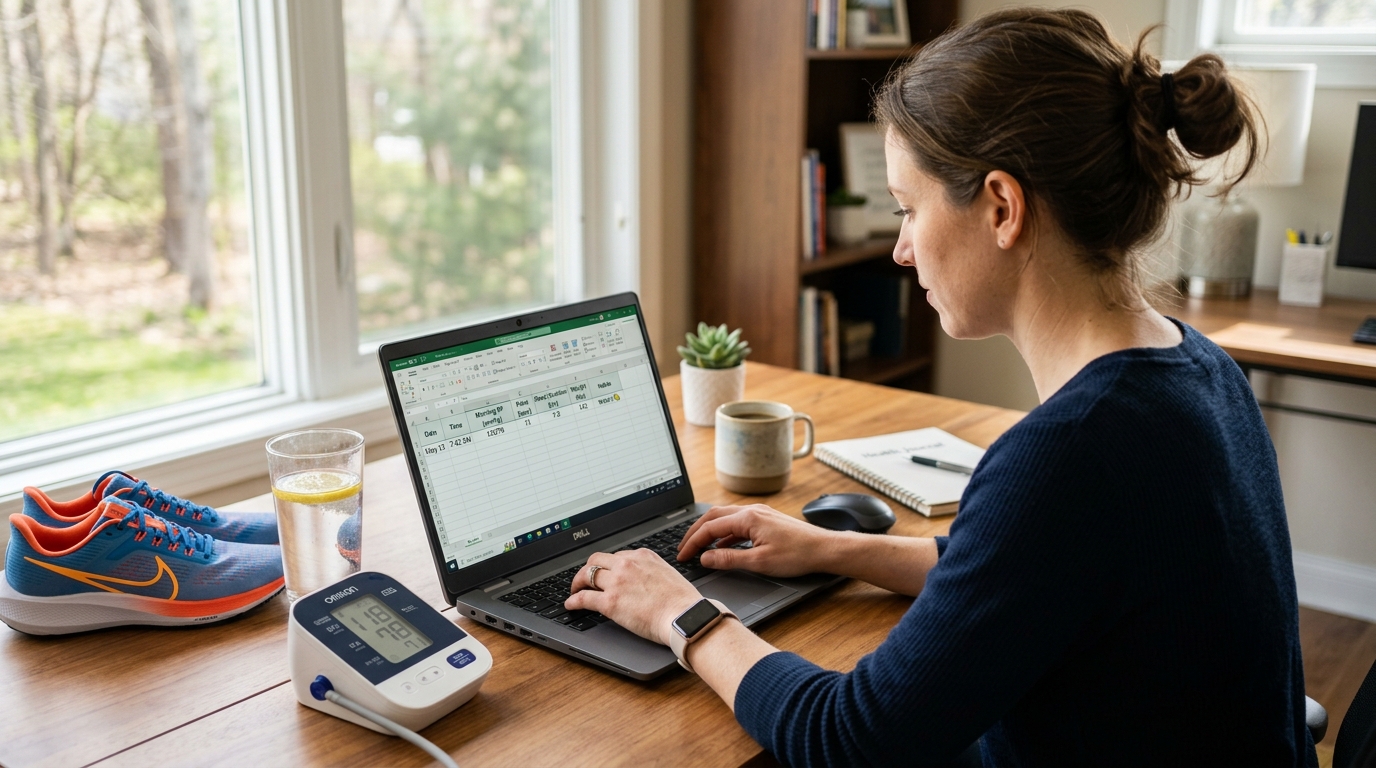
Modern validated arm-cuff digital monitors are generally accurate and preferred over wrist monitors for home use [SOURCE: verify — British Heart Foundation or similar validation guidance]. Home monitoring avoids 'white coat hypertension' (elevated readings in clinical settings from anxiety) and provides a better picture of average daily blood pressure. Take multiple readings at the same time each day for at least a week to establish a reliable baseline, not single readings which vary significantly.
Does coffee raise blood pressure?
Caffeine causes a short-term blood pressure spike of 3–4 mmHg in habituated coffee drinkers, and larger spikes in occasional consumers. However, habitual coffee consumption (3–4 cups daily) is not associated with sustained elevated blood pressure in most research — the tolerance effect appears to offset the acute response. For people with poorly controlled hypertension, reducing caffeine is reasonable pending better control; for those with well-managed blood pressure, habitual moderate coffee consumption is generally not a significant concern [SOURCE: verify — coffee and cardiovascular research].
Can I lower blood pressure without losing weight?
Yes. Exercise, DASH diet, sodium reduction, alcohol reduction, and sleep improvement all produce blood pressure reductions that are partially independent of weight change. The exercise effect in particular is well-demonstrated without significant weight loss. Weight loss is one of the most potent single interventions if achievable, but the other lifestyle changes are valuable regardless of whether weight loss occurs.
When should I start medication instead of trying lifestyle changes?
This is a clinical decision that depends on your absolute blood pressure level, your other cardiovascular risk factors, your response to lifestyle changes over a defined period, and your doctor's assessment. Stage 2 hypertension (140+/90+) typically warrants medication alongside lifestyle changes, not instead of them. Stage 1 hypertension in low-risk individuals is often managed with lifestyle changes first under medical supervision. Always make this decision with your GP or cardiologist.


