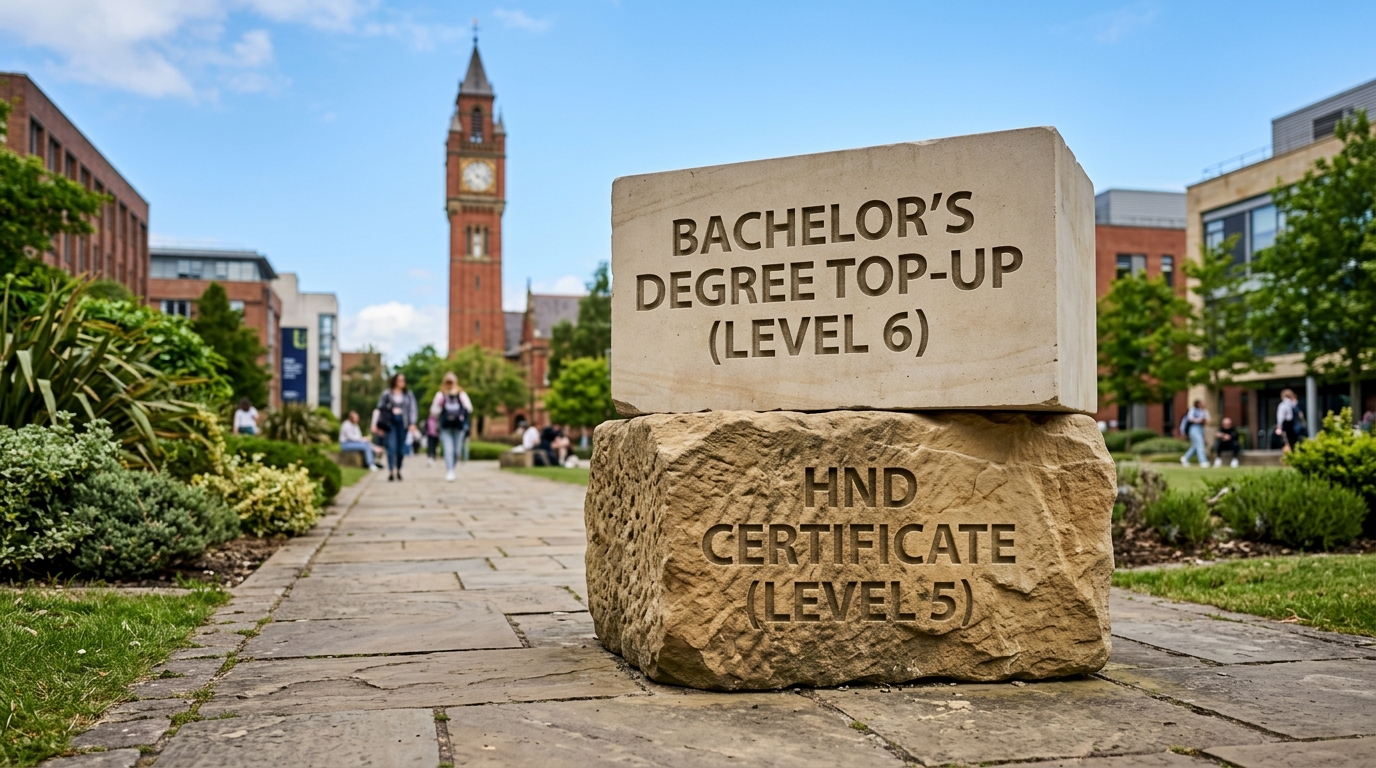
Countries That Accept HND for Degree Admission or Work Visa in 2026
A comprehensive guide to the countries that accept HND certificates for university top-up programmes and skilled worker visas — covering the UK, Canada, Australia, New Zealand, Ireland, Malaysia, Germany, and Commonwealth nations, with credential evaluation steps and visa comparison table.
Your Higher National Diploma is more internationally portable than you have probably been told. While some institutions treat it as a stepping stone rather than a destination, entire countries have built their admissions and immigration frameworks around qualifications at exactly this level. The countries that accept HND certificates for degree top-up programmes, skilled worker visas, and professional entry span four continents — and the gap in the market is not the certificate itself but knowing where to take it and how to present it correctly when you do.
This guide breaks down which countries genuinely accept HND holders for undergraduate top-up programmes, postgraduate pathways, and skilled worker visas — what you need to qualify, what the credential evaluation process looks like in each market, and which routes offer the clearest path to a full degree or permanent residency.
Disclaimer: Immigration and academic recognition policies change regularly. Always verify current requirements through official government and institutional sources before making any decisions based on information in this article.

What an HND Is — and Why Recognition Varies
A Higher National Diploma is a Level 5 qualification on the Regulated Qualifications Framework — broadly equivalent to the first two years of a bachelor's degree in most countries. It is awarded through institutions accredited by Pearson/BTEC, the Scottish Qualifications Authority (SQA), or equivalent national awarding bodies. In the UK, it sits between a foundation degree and an ordinary bachelor's degree in the qualifications hierarchy.
The recognition gap exists because higher education systems classify qualifications differently across national frameworks. Some countries have credit-transfer frameworks that map an HND directly onto year two or three of a degree programme. Others treat it as a professional qualification, fast-tracking holders into skilled work permits. A few — frustratingly — barely recognise it at all outside narrow technical fields.
What most guides overlook: recognition also depends heavily on your specific field of study. An HND in Engineering, Computing, or Nursing travels significantly better internationally than one in Hospitality or Creative Arts — primarily because STEM and healthcare credentials have more standardised global competency benchmarks. If your HND is in a technical field, your international options are materially wider.
Countries That Accept HND for University Top-Up Programmes
1. United Kingdom — The Most Straightforward Destination
The UK is the most direct pathway precisely because most HND programmes are issued by UK-accredited awarding bodies. The vast majority of UK universities accept a relevant HND for advanced entry — year two or final-year top-up — into a related bachelor's degree programme. This is sometimes called an 'advanced entry' or 'top-up' route.
Key practical details: a two-year HND typically qualifies you for year two or final-year entry depending on the programme and institution. Top-up degrees in the UK can be completed in 12 months full-time — making the total time to a full bachelor's degree from HND completion just one additional year. Institutions historically associated with vocational and technical education — Coventry, Northumbria, Plymouth, and many former polytechnics — are particularly experienced with HND entry routes and have established credit-mapping frameworks for common HND subjects.
One important nuance that even admissions officers sometimes miss: your HND issuing body matters. An SQA-certified HND from Scotland carries equivalent academic weight to a Pearson BTEC HND, but some universities will ask for programme-specific credit mapping rather than treating all HNDs as identical. Always contact the admissions office directly with your specific HND subject rather than relying on general entry requirement tables on the website — the general table may not reflect the department's actual flexibility.

International students on a UK Student Visa can work up to 20 hours per week during term time, which makes the top-up route financially viable for many candidates who cannot fund a full tuition fee without part-time income.
2. Canada — Strong Pathways With Provincial Variation
Canada's province-by-province higher education system makes HND recognition more variable than the UK — but several institutions actively recruit international HND holders and have structured advanced standing policies.
In Ontario, colleges including Humber, Seneca, and George Brown offer bridging programmes and formal advanced standing to HND holders in aligned subject areas. In British Columbia, BCIT (British Columbia Institute of Technology) evaluates HND on a case-by-case basis for technology and trades programmes and has a track record of recognising technical HNDs generously. In some programmes, a relevant HND can earn you up to one year of credit toward a three- or four-year degree — reducing both the time and cost of completion.
The practical immigration case for Canada is particularly compelling: the Post-Graduation Work Permit (PGWP) allows you to work in Canada after completing a qualifying programme at a designated learning institution. Completing a Canadian degree top-up programme on the back of an HND creates a legitimate pathway toward permanent residency via Express Entry — which awards points for Canadian education and work experience. The top-up to PR pathway is real but requires careful planning around programme type and institution designation status.
[DISCLAIMER: Canadian immigration eligibility requirements change regularly. Verify current PGWP and Express Entry eligibility rules at the official IRCC website before making any educational or immigration decisions.]
3. Australia — Formal Credit Transfer via the AQF
Australia uses the Australian Qualifications Framework (AQF), which maps international qualifications through a formal recognition process. An HND is typically assessed as equivalent to an AQF Level 5 (Diploma) or Level 6 (Associate Degree) — which means universities can grant up to one year of credit toward a bachelor's degree, depending on the subject alignment.
Universities of Technology — including UTS, RMIT, and Swinburne — have clear credit transfer policies for HND holders in computing, engineering, and business and have processed enough international HND applications to have established assessment pathways rather than treating each application as a novel case. You will need a Genuine Student declaration as part of the student visa process and must meet English proficiency requirements, typically IELTS 6.0–6.5 overall with no band below 5.5–6.0 depending on the institution and programme.

A point many applicants overlook: Australia's skills shortage lists mean HND holders in nursing, engineering, and IT may qualify for state-nominated visas even without upgrading to a full degree first. The Australian Skills Recognition Information (ASRI) database is the official starting point for credential assessment and will give you a clear indication of how your specific HND maps before you commit to an application.
4. New Zealand — Points-Based Recognition in a Smaller Market
New Zealand Qualifications Authority (NZQA) formally assesses international qualifications, and HND holders in eligible fields can apply for credit transfer at New Zealand institutions. AUT, Massey University, and Otago Polytechnic (now Te Pūkenga — New Zealand Institute of Skills and Technology) have accepted HND holders with advanced standing in technology and business fields.
New Zealand's Skilled Migrant Category Resident Visa awards points for qualification level — an HND with relevant work experience in a recognised shortage occupation can contribute meaningfully to your total points score even if it does not reach the same threshold as a full degree. The smaller population and active skilled worker recruitment relative to other English-speaking destinations means the recognition pathways are often more navigable than in larger countries with higher application volumes.
5. Ireland — Structured Pathways Through Technological Universities
As a country with historical and structural ties to the UK higher education system, Ireland's higher education institutions — particularly the network of Technological Universities that emerged from former Institutes of Technology — have formal structured pathways for HND holders. Irish Level 7 Ordinary Bachelor Degrees (typically three years) are directly comparable in academic level to the year above HND completion, meaning HND holders may enter at year two or complete a bridging module to progress to an Honours degree.
The Higher Education Links Scheme supports formal progression routes from further education qualifications to degree-level study. Ireland's technology industry — home to European headquarters of Google, Meta, LinkedIn, Apple, and others — creates real professional demand for HND-level graduates in IT and engineering, particularly if combined with a top-up degree from an Irish institution that carries EU-accredited status.
Post-Brexit note: EU/EEA freedom of movement rules no longer automatically apply to UK nationals entering Ireland for study or work, though the Common Travel Area arrangement between the UK and Ireland preserves specific rights that do not exist for other non-EU nationals. Verify your specific nationality entitlements before assuming access.
6. Malaysia — UK-Affiliated Degrees at Significantly Lower Cost
Malaysia has one of the most structured HND recognition systems outside Europe, partly because its private higher education sector was modelled on UK qualifications frameworks and has maintained those affiliations. Many Malaysian private universities — Taylor's, Sunway, INTI International — accept HND directly into year two of affiliated UK degree programmes, meaning graduates receive a degree awarded by the UK partner university rather than the Malaysian institution.

The financial case is distinctive: 3+0 and 2+1 twinning programmes allow you to complete part or all of a UK-accredited degree in Malaysia at roughly 40–60% of UK tuition costs while maintaining access to the same qualification credential. For HND holders from Commonwealth countries who want a UK-recognised degree without UK living costs, the Malaysia route is underutilised relative to its practical value.
7. Commonwealth Nations — Ghana, Kenya, and South Africa
Several Commonwealth countries have formal or informal HND recognition through shared qualifications frameworks, though the pathway varies more significantly by country, institution, and field of study than in the destinations above.
In Ghana, the Ghana Education Service recognises HND for teaching and technical roles, and universities including KNUST (Kwame Nkrumah University of Science and Technology) and the University of Ghana assess HND for entry into specific programmes on a case-by-case basis. In Kenya, the Kenya National Qualifications Authority has frameworks that accommodate HND in technical fields, and several universities offer degree completion pathways for holders of equivalent Level 5 qualifications. In South Africa, SAQA (South African Qualifications Authority) assesses foreign qualifications — an HND typically maps to level 5 on the NQF — and universities can grant advanced standing on that basis.
A practical observation most guides miss: in these markets, HND holders often achieve better outcomes by entering the workforce first rather than immediately pursuing academic progression. Two to three years of professional experience in a relevant technical field with a multinational employer operating in Africa frequently opens employer-sponsored degree completion routes at lower personal cost than self-funded international study.
HND for Skilled Worker Visas — Without a Full Degree
Not every pathway requires returning to university. Several countries issue work visas for which an HND plus relevant professional experience qualifies you directly — without requiring a bachelor's degree as a prerequisite.

Germany deserves specific attention. The country's Federal Employment Agency assesses foreign qualifications through a formal process, and Germany's structural shortage of skilled workers in engineering, IT, nursing, and healthcare has pushed it to accept more diverse qualification types than it historically did. If your HND is in a STEM or healthcare field, Germany's recognition process — while requiring effort — is a serious option that many UK and Commonwealth HND holders do not consider. The official Anabin database lists which foreign qualifications are recognised in Germany and at what level.
Hypothetical example 1: Chidi completed an HND in Software Engineering in Nigeria and has three years of relevant professional experience. Rather than immediately pursuing a full degree, he applies for a Germany Job Seeker Visa, obtains a formal qualification recognition through the BA, and secures an IT role at a German technology company. His employer later sponsors a part-time degree programme. The HND plus experience route was faster and less expensive than funding a full degree before entering the German labour market.
Hypothetical example 2: Amara holds an HND in General Nursing from a UK institution and has two years of post-qualification experience in a London hospital. She applies for an Australian Skilled Nominated Visa, completes a skills assessment through the Australian Health Practitioner Regulation Agency (AHPRA), obtains state nomination from Queensland (which has specific healthcare worker targets), and is issued a visa without completing a further degree. The HND plus AHPRA registration was sufficient for both the visa and professional recognition.
What You Will Need Regardless of Destination
The specific requirements vary by country, but the following documents are required in almost every international HND recognition process:
- Official transcripts from the awarding body — Pearson, SQA, or your specific institution — not just the certificate. Many recognition processes require unit-by-unit grade breakdowns, not just the overall award classification.
- Certificate of authenticity / apostille — some countries require apostille certification (a specific official authentication recognised under the Hague Convention) on the original certificate. The UK Foreign, Commonwealth and Development Office issues apostilles for UK documents. Budget time and cost for this step.
- Credential evaluation report — from a recognised body in your target country. World Education Services (WES) for Canada; NZQA for New Zealand; ENIC-NARIC (the replacement for UK NARIC) for European recognition; the relevant assessing authority for Australia by occupation.
- English proficiency scores — IELTS, TOEFL, or PTE Academic, typically 6.0–6.5 minimum for degree entry; higher thresholds for healthcare roles.
- Work experience documentation — employment reference letters, payslips, or employer certificates confirming role, responsibilities, and duration. This is particularly critical for visa routes that award points for work experience.
A consistent mistake: applying to universities directly and asking them to assess credential equivalence. This is backwards. Obtain the formal credential evaluation from the recognised body first, then use that document in your university or visa application. Admissions officers at most international institutions are not qualification framework specialists — they need a formal assessment document from an authoritative body to make their decision. Without it, applications are frequently delayed or incorrectly assessed.
Key Takeaways
- The UK, Canada, Australia, Ireland, and New Zealand offer the most structured and documented HND pathways into degree top-up programmes or skilled worker visa routes
- Your field of study is as important as the qualification level — STEM, healthcare, and IT HNDs travel significantly better internationally than arts or hospitality
- Skilled worker visa routes in the UK, Australia, New Zealand, and Germany allow HND holders to enter the workforce without completing a full degree first — experience plus HND is a legitimate combination in multiple immigration systems
- Obtain a formal credential evaluation from the recognised body in your target country before applying anywhere — do not ask universities to assess equivalence themselves
- Germany and Malaysia are consistently underrated destinations for HND holders — Germany for its skills shortage and open qualification recognition; Malaysia for UK-affiliated degrees at substantially lower cost
Frequently Asked Questions
Can I get a master's degree directly from an HND?
In most countries, a direct HND-to-master's route is not available — postgraduate study typically requires a bachelor's degree as the prerequisite. However, some UK universities offer accelerated bachelor's or integrated master's pathways for HND holders that can compress the total time to a master's qualification. The most practical route for most HND holders targeting postgraduate study is the HND-to-top-up degree route (one additional year in the UK) followed by a one-year master's programme — two additional years of total study to reach postgraduate level.
Is a UK HND the same as a US associate degree?
They are comparable in academic level — both represent approximately two years of post-secondary education at credit level — but they are not identical. A UK HND is typically more vocationally and practically oriented than a US associate degree, which often includes more general education breadth requirements. The specific equivalence determination depends on the receiving country's framework and the specific subject area. WES and similar evaluation services will map this formally for North American applications.
Does an HND help with Australian immigration points?
Through a formal skills assessment, an HND maps to AQF Level 5 or 6 in Australia's qualification framework. In the points-based migration system, a diploma-level qualification awards points — fewer than a bachelor's degree, but meaningful when combined with sufficient work experience points and state nomination. The specific point value depends on your age and the version of the points test applicable to your visa subclass at the time of application.
Which country is most accessible for HND holders to obtain a student visa?
The UK and Ireland are generally most straightforward given their direct familiarity with HND qualifications — admissions processes there are well-established for this qualification type. Canada and Australia have strong pathways but add credential assessment steps that introduce processing time. The right answer depends on your nationality (some nationalities face higher visa refusal rates in certain countries regardless of qualification), your financial evidence capacity, and your English proficiency test scores.
Can I work abroad with just an HND and no additional degree?
Yes — particularly in engineering, IT, and healthcare, where multinational employers operating globally regularly hire HND holders for technical roles. The key variable is demonstrating relevant professional experience alongside the qualification. A compelling CV with two to three years of post-HND work experience in a relevant technical field is frequently more employable than a freshly completed degree with minimal experience — this is especially true in technology and engineering where demonstrated output matters more than credential level to many hiring managers.